Archive

Articles taggués ‘database’

Making it better: basic MySQL performance tuning

11/11/2023 Comments off

MySQL performance tuningmysql performance tuning

Overview

DV servers do not have any MySQL modifications when they are initially provisioned. In fact, the my.cnf file that is included as part of the database server’s configuration includes multiple deprecated directives. Although this article will actually increase the memory used by MySQL the performance gain can be dramatic depending on your queries and database usage. The average user will get more mileage out of the server’s resources with MySQL changes similar to the following.

CAUTION:

With that said, it should always be noted that this can not be guaranteed to be a one-size-fits-all solution. It is possible that these recommendations are not ideal for a specific server configuration. More information on tuning specific situations can be found at the bottom of this article.

Requirements

Before you start, this article has the following dependencies:

Instructions

Tuning MySQL based on available RAM

  1. Create a backup of your MySQL config:
    cp /etc/my.cnf /etc/my.cnf.YYYY-MM-DD.bak
    

    (Remember to replace YYYY-MM-DD with today’s date, ie: 2012-02-14.)

  2. All of your server’s memory allocations can be found in /proc/user_beancounters. However, these can be difficult to read. The following commands take this information and turn your server into a number. If your DV has 1G RAM, the number is 2; for 2G RAM, it is 3; so on and so forth.
ramCount=`awk 'match($0,/vmguar/) {print $4}' /proc/user_beancounters`
ramBase=-16 && for ((;ramCount>1;ramBase++)); do ramCount=$((ramCount/2)); done
  1. On its own, this number may not mean much more than the beancounters themselves. Consider this example, and the logic behind it: Why would a DV 4.0 with 4G of RAM have the same MySQL configuration as a server with DV 4.0 with 1G of RAM? It is very unlikely that those two servers will have an identical MySQL workload – their configuration files should reflect as much. Using the server’s beancounters as a guideline, a more suitable my.cnf can be crafted. The following is a single command:
cat <<EOF > /etc/my.cnf
[mysqld]
# Basic settings
user = mysql
datadir = /var/lib/mysql
socket = /var/lib/mysql/mysql.sock

# Security settings
local-infile = 0
symbolic-links = 0

# Memory and cache settings
query_cache_type = 1
query_cache_size = $((2**($ramBase+2)))M
thread_cache_size = $((2**($ramBase+2)))
table_cache = $((2**($ramBase+7)))
tmp_table_size = $((2**($ramBase+3)))M
max_heap_table_size = $((2**($ramBase+3)))M
join_buffer_size = ${ramBase}M
key_buffer_size = $((2**($ramBase+4)))M
max_connections = $((100 + (($ramBase-1) * 50)))
wait_timeout = 300

# Innodb settings
innodb_buffer_pool_size = $((2**($ramBase+3)))M
innodb_additional_mem_pool_size = ${ramBase}M
innodb_log_buffer_size = ${ramBase}M
innodb_thread_concurrency = $((2**$ramBase))

[mysqld_safe]
# Basic safe settings
log-error = /var/log/mysqld.log
pid-file = /var/run/mysqld/mysqld.pid
EOF
  1. Now, armed with a new configuration, all that is left to do is to restart MySQL:
    /etc/init.d/mysqld restart

Lire la suite…

5 Steps to Setup MySQL Master Master Replication on Ubuntu 16.04

06/11/2023 Comments off

Source: linoxide.com

The Master-Slave replication in MySQL databases provides load balancing for the databases. But it does not provide any failover scenario. If the Master server breaks, we cannot execute queries directly on the slave server. In addition to load balancing, if we need failover in our scenario, we can setup 2 MySQL instances in Master-Master replication. This article describes how this can be achieved in 5 easy steps on Ubuntu 16.04 server.

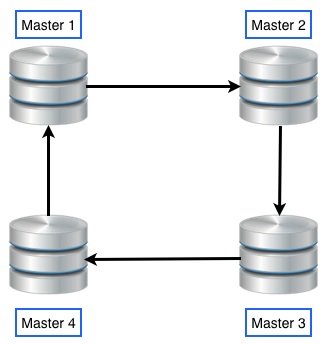
In Master master replication, both the servers play the role of master and slave for each other like in the following diagram:

MySQL Master-Master configuration

Each server serves as Master for the other slave at the same time. So if you are familiar with the Master-Slave replication in MySQL, this must be a piece of cake for you.

Lire la suite…

ERROR 1040…again

04/11/2023 Comments off

A pretty common topic in Support tickets is the rather infamous error: ERROR 1040: Too many connections. The issue is pretty self-explanatory: your application/users are trying to create more connections than the server allows, or in other words, the current number of connections exceeds the value of the max_connections variable.

This situation on its own is already a problem for your end-users, but when on top of that you are not able to access the server to diagnose and correct the root cause, then you have a really big problem; most times you will need to terminate the instance and restart it to recover.

Root user can’t connect either! Why!?

In a properly set up environment, a user with SUPER privilege will be able to access the instance and diagnose the error 1040 problem that is causing connection starvation, as explained in the manual:

mysqld actually permits max_connections + 1 client connections. The extra connection is reserved for use by accounts that have the SUPER privilege. By granting the privilege to administrators and not to normal users (who should not need it), an administrator who also has the PROCESS privilege can connect to the server and use SHOW PROCESSLIST to diagnose problems even if the maximum number of unprivileged clients are connected.

But we see lots of people who give SUPER privileges to their application or script users, either due to application requirements (dan Lire la suite…

MySQL Circular Replication

04/11/2023 Comments off

Source: icicimov

Setting the MySQL in Master-Master mode means in case of an instance failure the other one will transparently take over the client connections avoiding the need of any manual intervention. In Master-Slave mode we would need to manually promote the Slave to Master which will cause service interruption. MySQL circular replication can be used to scale out write nodes but there are certain considerations to be taken into account. The data will only be as complete as the speed of the replication. If data is inserted faster than the MySQL slave thread can run then each node can be missing data from the other node. This can be acceptable or not depending on the application and data requirements. For example if we use foreign keys in our database, inserts will fail if the data which the foreign key references has not yet been replicated. These issues need to be considered before we decide to employ Master-Master circular replication.

Setup

The hosts have been setup with two network interfaces, one on a public 192.168.100.0/24 network that will be used for incoming client connections and cluster communication and one on the private 10.10.1.0/24 network that will be used for the replication traffic only. We will start by setting the MySQL service on the nodes first.

Lire la suite…

Initialize MySQL Master-Slave replication with a script

03/11/2023 Comments off

Mysql Master-SlaveSource: Nico’s Blog

MySQL Master-Slave replication is natively supported by MySQL. However its configuration is not so simple. For each slave added as a replica, a few configuration steps must be done on both the master and itself.

So if you want to install a master instance on a machine or VM, and then install 5 other instances as slaves on other hosts, you will be doing quite a lot of back-and-forth configuration. I couldn’t find any way of configuring the replication automatically on the web, so I decided to create my own bash script to do it.

MySQL Master-Slave Replication

What is it and why use it ?

This form of replication is pretty simple: only a single instance, known as the master, creates or updates data. Each additional instance, called slave, simply keeps a copy of the master’s data, by replicating it each time the master has new data. Lire la suite…