How can I find out if a specific program is installed?
06/12/2023 Comments off
there’s always apt-cache policy <package-name> (no sudo needed).
Not installed:
olivier@neews:/$ apt-cache policy gnuift
 gnuift:
   Installed: (none)
   Candidate: 0.1.14-11
   Version table:
      0.1.14-11 0
         500 http://archive.ubuntu.com/ubuntu/ oneiric/universe amd64 Packages
Installed:
olivier@neews:/$ apt-cache policy firefox
 firefox:
   Installed: 8.0+build1-0ubuntu0.11.10.3
   Candidate: 8.0+build1-0ubuntu0.11.10.3
   Version table:
  *** 8.0+build1-0ubuntu0.11.10.3 0
         500 http://archive.ubuntu.com/ubuntu/ oneiric-updates/main amd64 Packages
         500 http://archive.ubuntu.com/ubuntu/ oneiric-security/main amd64 Packages
         100 /var/lib/dpkg/status
      7.0.1+build1+nobinonly-0ubuntu2 0
         500 http://archive.ubuntu.com/ubuntu/ oneiric/main amd64 Packages
Or dpkg: dpkg -l | grep -E '^ii' | grep <package name>. When it’s not installed it won’t show output. When it is, it’ll show something like:
olivier@neews:~$ dpkg -l | grep -E '^ii' | grep firefox
 ii  firefox                                                     8.0+build1-0ubuntu0.11.10.3                            Safe and easy web browser from Mozilla
 ii  firefox-branding                                            8.0+build1-0ubuntu0.11.10.3                            Safe and easy web browser from Mozilla - transitional package
 ii  firefox-globalmenu                                          8.0+build1-0ubuntu0.11.10.3                            Unity appmenu integration for Firefox
 ii  firefox-gnome-support                                       8.0+build1-0ubuntu0.11.10.3                            Safe and easy web browser from Mozilla - GNOME support
 ii  firefox-locale-en                                           8.0+build1-0ubuntu0.11.10.3                            English language pack for Firefox
It's obviously a fuzzier search but handy if you're not sure which package you're looking for.

 For manually installed things...

 A bit harder but if they're on the current path, you could just run them. That's a bit of mission so I'd rather just run:

 oli@bert:/$ which chromium-browser
 /usr/bin/chromium-browser
And:
oli@bert:/$ which gnuift
# returns nothing
Which is better?
That depends on the sanity of user. There’s nothing to stop somebody installing something called chromium-browser that isn’t Chromium. They could even package it up incorrectly and install that. Neither method can be 100% certain.
But assuming the owner is sane – packages should be good enough for most people.
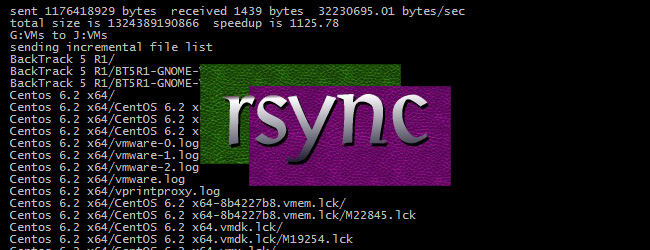 Rsync is a program for synchronizing two directory trees across different file systems even if they are on different computers. It can run its host to host communications over ssh to keep things secure and to provide key based authentication. If a file is already present in the target and is the same as on the source the file will not be transmitted. If the file on the target is different than the one on the source then only the parts of it that are different are transferred. These features greatly increase the performance of rsync over a network.