What Is SYN Flood Attack? Detection & Prevention In Linux
Source: linoxide.com
A SYN flood attack is a form of denial-of-service attack in which an attacker sends a large number of SYN requests to a target system’s services that uses TCP protocol. This will consume the server resources to make the system unresponsive to legitimate traffic. This attack can occur on any services that use TCP protocol and mainly on web service. In this article, we will go through the basics of SYN flood attacks and the mitigation steps in detail.
The SYN Flood attack exploits an implementation characteristic of the Transmission Control Protocol (TCP), which is called 3-way handshake. Following are the steps that happen in a normal 3-way handshake.
1. The client requests a connection by sending a SYN (synchronize) message to the server.
2. The server acknowledges this request by sending SYN-ACK back to the client.
3. The client responds with an ACK, and the connection is established
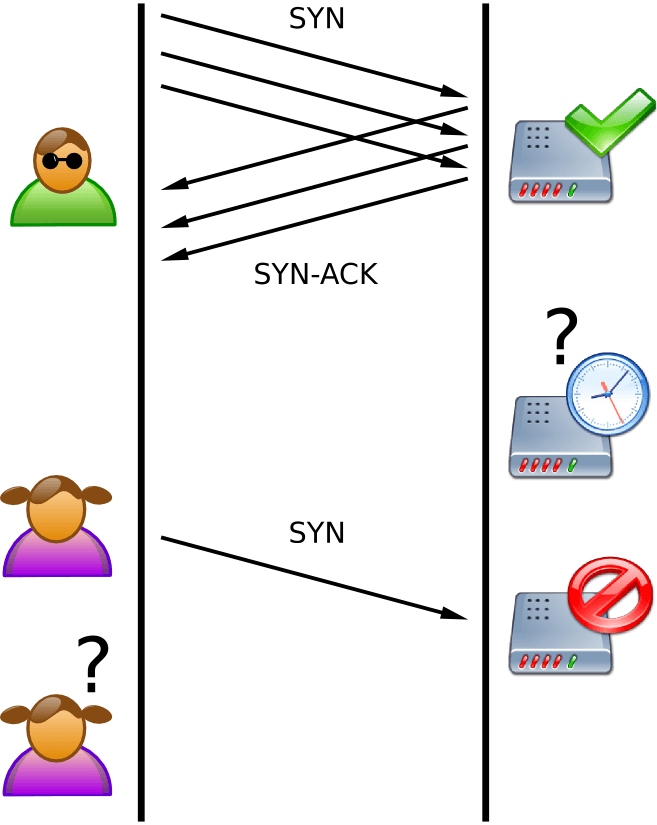
A SYN flood attack works by not responding to the server with the expected ACK code. By these half-open connections, the target machines TCP backlog will get filled up and hence all new connections may get ignored. This will cause the legitimate users will also get ignored.

 First off, if you want the real deal and get your service DDoS protected from even the most complex types of DDoS attacks by security specialists today, don’t bother reading about SYNPROXY and instead check out our