Archive

Archives pour la catégorie ‘Système’

Where to Set Environment Variables in Mac OS X

31/12/2023 Comments off

At the command line, environmental variables are defined for the current shell and become inherited by any running command or process. They can determine anything from the default shell, the PATH, the users home directory, to the terminal emulation type, current working directory, where a history file is located, language and localization settings, and going further to include shell variables, which include everything from customizations to the bash prompt, colorized ls output, and changes to terminal appearance, to aliases, and much more.


Let’s walk through how to list environment and shell variables, and then how to set and add new environment variables at the command line of Mac OS X.

Displaying Current Environment & Shell Variables in Mac OS X

To quickly get a list of environmental variables, you can use the following command:

printenv

If you want to see a complete list of shell variables, the ‘set’ command can be issued as well:

set

The output of these commands can be lengthy so you may wish to pipe the output through the less or more commands.
Lire la suite…
Categories: Système Tags: , ,

How To Use Apache JMeter To Perform Load Testing on a Web Server

30/12/2023 Comments off

Introduction

In this tutorial, we will go over how to use Apache JMeter to perform basic load and stress testing on your web application environment. We will show you how to use the graphical user interface to build a test plan and to run tests against a web server.

JMeter is an open source desktop Java application that is designed to load test and measure performance. It can be used to simulate loads of various scenarios and output performance data in several ways, including CSV and XML files, and graphs. Because it is 100% Java, it is available on every OS that supports Java 6 or later.


Prerequisites

In order to follow this tutorial, you will need to have a computer that you can run JMeter on, and a web server to load test against. Do not run these tests against your production servers unless you know they can handle the load, or you may negatively impact your server’s performance.

You may adapt the tests in this tutorial to any of your own web applications. The web server that we are testing against as an example is a 1 CPU / 512 MB VPS running WordPress on a LEMP Stack, in the NYC2 DigitalOcean Datacenter. The JMeter computer is running in the DigitalOcean office in NYC (which is related to the latency of our tests).

Please note that the JMeter test results can be skewed by a variety of factors, including the system resources (CPU and RAM) available to JMeter and the network between JMeter and the web server being tested. The size of the load that JMeter can generate without skewing the results can be increased by running the tests in the non-graphical mode or by distributing the load generation to multiple JMeter servers.  Lire la suite…

How To Improve Database Searches with Full-Text Search in MySQL 5.6 on Ubuntu 16.04

29/12/2023 Comments off

Introduction

Full-text search, or FTS, is a technique used by search engines to find results in a database. You can use it to power search results on websites like shops, search engines, newspapers, and more.

More specifically, FTS retrieves documents that don’t perfectly match the search criteria. Documents are database entities containing textual data. This means that when a user searches for « cats and dogs », for example, an application backed by FTS is able to return results which contain the words separately (just « cats » or « dogs »), contain the words in a different order (« dogs and cats »), or contain variants of the words (« cat » or « dog »). This gives applications an advantage in guessing what the user means and returning more relevant results faster.

Technically speaking, database management systems (DBMS) like MySQL usually allow partial text lookups using LIKE clauses. However, these requests tend to underperform on large datasets. They’re also limited to matching the user’s input exactly, which means a query might produce no results even if there are documents with relevant information.

Using FTS, you can build a more powerful text search engine without introducing extra dependencies on more advanced tools. In this tutorial, you will use MySQL 5.6 to query a database using full-text search, then quantify the results by their relevance to the search input and display only the best matches.


Prerequisites

Before you begin this tutorial, you will need:

Lire la suite…

Categories: Système Tags:

ORC – Un réseau de stockage cloud, anonyme et décentralisé reposant sur Tor

26/12/2023 Comments off

Counterpoint Hackerspace, une bande de geeks localisée à Roswell dans l’état de Georgie aux États unis, a eu l’excellente idée de mettre au point un outil permettant de stocker sur Tor des fichiers, un peu à la manière d’un espace « cloud », mais avec tous les avantages que Tor peut apporter : anonymat, décentralisation et gestion par la communauté. Lire la suite…

Categories: Logiciel, Sécurité, Système Tags:

High Sierra Problems: How To Fix The Most Common MacOS Issues

26/12/2023 Comments off

The excitement of installing a new version of macOS, especially if it’s a High Sierra 10.13, is only tempered by the possibility of it not working properly or not being compatible with the apps you use most.

Before you begin upgrade to MacOS make a bootable backup

If you haven’t started the process of upgrading yet, check if the Mac is compatible with macOS High Sierra and make a bootable backup. 

Do it now, before you do anything else. If things go disastrously wrong at least you’ll be able to boot from macOS’ Recovery partition and migrate all your data back to your Mac. You can use any backup tool you like – Apple obviously favours Time Machine, but you don’t have to use it. You can use, for example, Get Backup Pro, which comes with your Setapp subscription. Don’t have a Setapp subscription? Click here to sign up.

Common MacOS High Sierra Problems

While most new versions of macOS are relatively problem-free, it’s not unknown for users to have issues – particularly with a beta or .0 release. Thankfully most are easy to resolve. Here’s how to fix the most common High Sierra issues.

High Sierra Installer Won’t Download

If you’re trying to download the macOS High Sierra installer, you’ll need to have signed up to App Store. If you’ve done that, and managed to start the downloading process only for it to fail, force quit the App Store app.

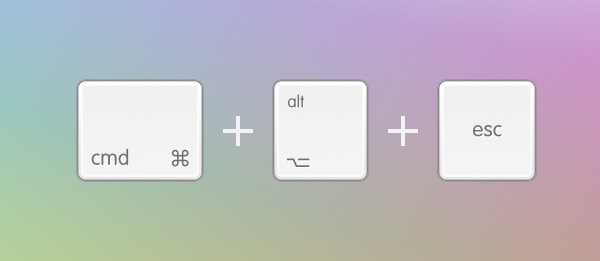
  1. Press Cmd-Alt-Esc or go to the Apple menu and choose Force Quit.
  2. Select the App Store app and confirm you want to force quit.
  3. Re-launch the App Store and try downloading again.

Macos High Sierra Won’t Install

If the download completes successfully but the installation doesn’t finish, force quit the installer using the same procedure as above. 

  1. Restart your Mac
  2. Launch the App Store app and go to the Purchases tab. 
  3. Find macOS High Sierra and click Install. 

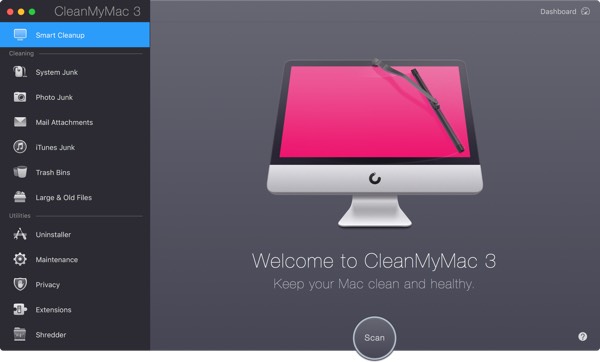
If that doesn’t work, try deleting the downloaded installer (it’s in your Applications folder) using CleanMyMac and download it again.

If you have a copy of macOS Server in your applications folder, that may be the root of the problem. Delete it and try again.

Lire la suite…

Categories: Logiciel, Système Tags: ,