Installation, configuration et administration d’un serveur dédié
Ces tutoriaux ont été réalisés sous Debian (versions Etch 4.0 et Lenny 5.0) mais peuvent être transposés à d’autres distributions Linux, notamment Ubuntu. Ils sont applicables aux serveurs dédiés 1&1, Dedibox, OVH, Amen, et bien d’autres.
Tous les tutoriaux sont basés sur un serveur nommé test.alsacreations.com pour lequel nous disposons d’un utilisateur dew et d’un accès root (super-administrateur), chacun avec leur propre mot de passe.
Nous partons de l’idée d’obtenir un serveur web avec tout ce qu’il faut pour héberger plusieurs domaines et sites. Vous pouvez tout configurer à la main ou bien faire confiance à un panel d’administration.
Liste complète sans panel web
Ces tutoriaux conviennent à l’installation complète d’un serveur
Attention : nous préconisons désormais l’utilisation du panel ISPConfig, en lieu et place du panel DTC. Il est tout aussi simple à installer et à utiliser. Veuillez vous référer à sa documentation.
Around the beginning of 2005 we saw an increase in brute-force ssh attacks – people or robots trying different combinations of username and password to log into remote servers. A quick search on this topic returns many references to iptables and ipchains but noone really explained how they work.
Having just gone through this learning curve myself, and found a satisfactory solution in the fail2ban package, I’m going to try and explain how to achieve the simple goal of banning IP addresses that make repeated failed ssh login attempts.
If you want more technical information regarding firewalls and iptables in particular, see the References section at the bottom of this page. Lire la suite…
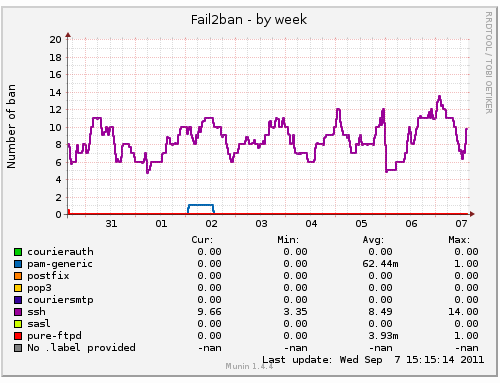
Fail2ban is a very useful and powerful solution to limit the bruteforce on your server. but fail2ban doesn’t provide you a way to contact directly the IP provider’s of bruteforce attacks source. I have modify an fail2ban action file’s and create a script for that.