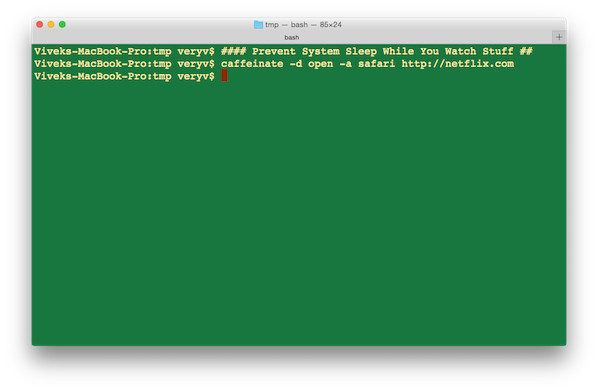
I’m running a process to complete backup and covert images in Mac OS X laptop. I do not wish to disable sleep manually from my OS X power options (Energy Saver). How do I temporarily prevent a Mac from sleeping while my process is still active in Mac OS X Unix operating systems? How can I prevent the system from sleeping temporarily from the command prompt?
You can use the caffeinate command. This command creates assertions to alter system sleep behavior. If no assertion flags are specified, caffeinate creates an assertion to prevent idle sleep.
Another option is to use the pmset command to manipulate power management settings.
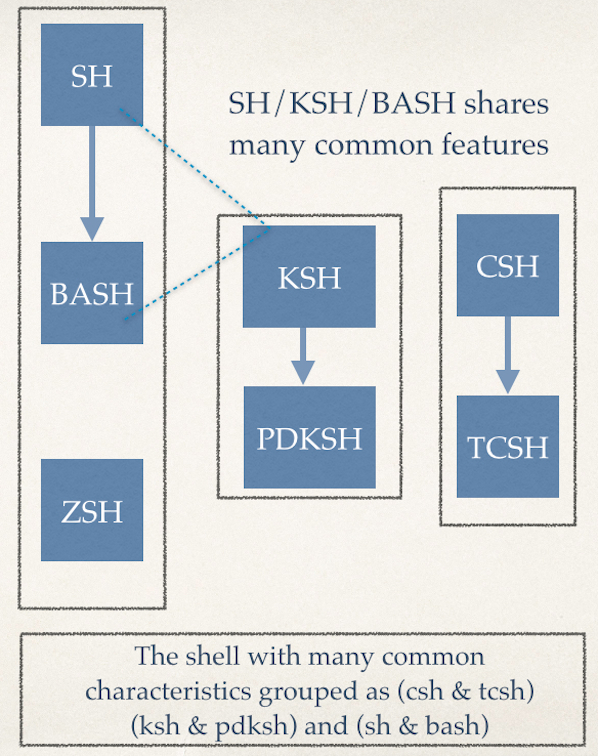
On a Linux or Unix-like systems each user and process runs in a specific environment. An environment includes variables, settings, aliases, functions and more. Following is a very brief introduction to some useful shell environment commands, including examples of how to use each command and setup your own environment to increase productivity in the command prompt.
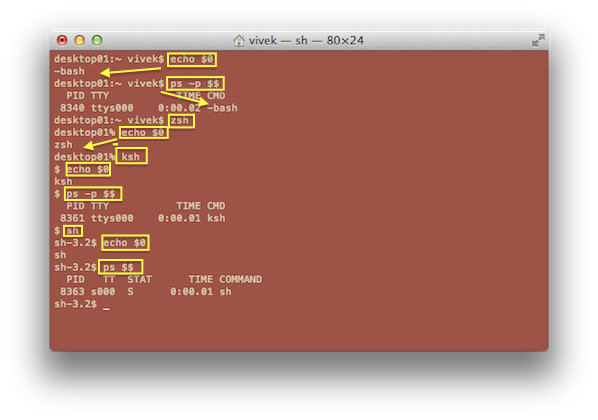
Finding out your current shell
Type any one of the following command at the Terminal app:
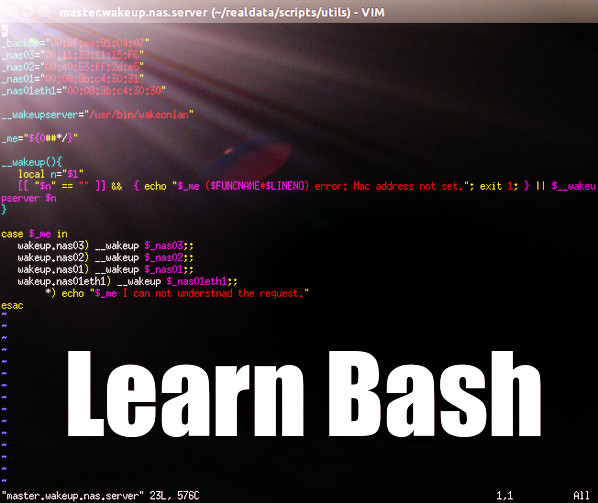
Bash (Bourne-Again SHell) is a Linux and Unix-like system shell or command language interpreter. It is a default shell on many operating systems including Linux and Apple OS X. Today, we’ll see how to quickly learn scripting.
If you have always used a graphic user interface like KDE or Gnome or MS-Windows or Apple OS X, you are likely to find bash shell confusing. If you spend some time with the bash shell prompt and it will be difficult for you to go back.
Here are a list of tutorials and helpful resources to help you learn bash scripting and bash shell itself.
For new computer or Laptop or server, I need to collect the information about its hardware. This is also useful when you need to replace a disk or memory with a vendor. In order to replace hardware you need all information in advance. In this post, I’m going to list commands that you can use to collect the hardware information.
All of the following commands are tested on Ubuntu Linux LTS 14.04, but should work with any modern distro too such as Debian or Fedora Linux.
How do I find out my public IP address on the Linux and OS X Unix command line to use with my own bash shell script without using third party web site? Is there command-line option which will show my dynamic IP address on a Ubuntu or Fedora Linux?
There are many ways to find out your public IP address or wan (Wide Area Network) IP on a Linux or Unix-like operating systems such as FreeBSD, OpenBSD, NetBSD, Apple OS X, and others.
Explain IP addresses
An IP is short for Internet Protocol. It is used to identify computers or mobile devices on the Internet. Each device connected to the Internet has an IP address. IP address can be used to personalize information.