Archive

Archives pour la catégorie ‘Réseau’

psad: Linux Detect And Block Port Scan Attacks In Real Time

15/01/2024 Comments off

Source: NixCraft

Q. How do I detect port scan attacks by analyzing Debian Linux firewall log files and block port scans in real time? How do I detect suspicious network traffic under Linux?

A. A port scanner (such as nmap) is a piece of software designed to search a network host for open ports. Cracker can use nmap to scan your network before starting attack. You can always see scan patterns by visiting /var/log/messages. But, I recommend the automated tool called psad – the port scan attack detector under Linux which is a collection of lightweight system daemons that run on Linux machines and analyze iptables log messages to detect port scans and other suspicious traffic.

psad makes use of Netfilter log messages to detect, alert, and (optionally) block port scans and other suspect traffic. For tcp scans psad analyzes tcp flags to determine the scan type (syn, fin, xmas, etc.) and corresponding command line options that could be supplied to nmap to generate such a scan. In addition, psad makes use of many tcp, udp, and icmp signatures contained within the Snort intrusion detection system.

Install psad under Debian / Ubuntu Linux

Type the following command to install psad, enter:
$ sudo apt-get update
$ sudo apt-get install psad
Lire la suite…

Rediriger un nom de domaine vers un sous-répertoire

14/01/2024 Comments off

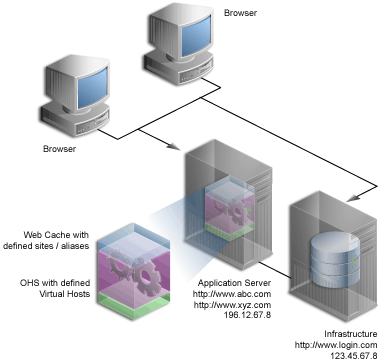
Quand votre nom de domaine pointe vers un hébergement mutualisé, vous n’avez, la plupart du temps, pas le droit de modifier les VirtualHost du serveur Apache.

Virtual Hosts

Virtual Hosts

Pour pallier ce manque, une redirection s’impose mais par un autre biais: l’utilisation de l’URL Rewrting. Lire la suite…

Changer le mot de passe perdu de Webmin

12/01/2024 Comments off

Un jour vous pouvez resté bloqué par un mot de passe perdu pour accéder à Webmin et vous auriez besoin d’un moyen de le changer.

Voici comment: pour commencer, connectez-vous à votre système en ssh.Vous devez trouver où Webmin est installé et donc le chemin que le script utilisera pour réinitialiser le mot de passe. Lire la suite…

Monitor Network Connections in Mac OS X for Free with Private Eye

11/01/2024 Comments off

Source: OSXdaily

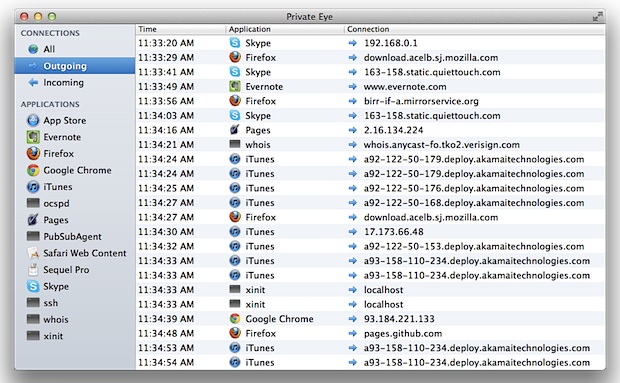
Private Eye is a free real-time network monitor app for Mac OS X that is extremely easy to use. Upon launching the app, you’ll start to see all open network connections by application and process, and you can then filter connections by app, monitor all open connections, or watch only incoming or outgoing transfer.

private-eye-network-connection-monitor-mac

Connections are reported by application, the time of the connection, and arguably the most useful, the IP address that is being connected to by the app, making it easy to see socket and routing data, letting you know exactly what app is communicating with what server or IP address, for both local and broader internet networks. If you have any interest in networking, privacy, security, or you just want to keep an eye on what apps are connecting to the internet and to where, you should download this app, but it’s also an amazingly useful tool for troubleshooting network problems and figuring out what is using the network.


Download and install Private Eye by putting it into your /Applications/ folder, then open PrivateEye to get started. The list of open network connections is easy to read, you’ll see a time stamp of the connection, the application name, and where the connection is going to by IP (or coming from, as determined by the arrow pointing left for in, or right for out).

private-eye-connections

Using the left side menu you can quickly break down connections to see them all, only show incoming transfers, outgoing connections, or display connections by specific application only. Apps are easy to identify in this list, as are daemons running in the background (like PubSubAgent), and command line processes belonging to the user are also visible (ssh, for example).

This is a simple yet powerful tool without the complexity or the learning curves related to compiling and using the command line tools lsof, watch, open_ports, or wireshark, and is therefore highly recommended for anyone who is interested in seeing this kind of information, whether it’s out of general curiosity, or to help troubleshoot and diagnose specific network activities.

Aria2 – L’outil de téléchargement ultra rapide

10/01/2024 Comments off

Source: korben.info

Les barbus du Linux le connaissent depuis longtemps, mais pour les autres, je vous explique rapidement. Tout d’abord Aria2 est sous licence GPL et tourne sans aucun souci sous Mac, Linux, Windows et même Android. L’outil est léger (il consomme peu de CPU et de mémoire), mais surtout très puissant puisqu’il gère en plus des liens classiques, les Metalink, ce qui lui permet de télécharger des fichiers en exploitant plusieurs connexions simultanées utilisant plusieurs sources et/ou protocoles différents.

Oui c’est fou ! Cela permet d’exploiter au maximum la bande passante que vous avez à votre disposition.

Aria2 supporte donc le HTTP, FTP, mais aussi Bittorrent avec toutes ses fonctionnalités (DHT, chiffrement PEX, URI magnétique, Web-Seeding, téléchargement sélectif, tracker UDP et le protocole Local Peer Discovery). Aria2 est aussi pilotable à distance (support RPC) et gère sans souci ce qui est droit d’accès, cookies, proxys…etc.

N’allez pas croire que Aria2 est un outil compliqué à prendre en main. Taratata, c’est au contraire très simple à piger, comme vous allez voir dans les exemples ci-dessous :

Pour télécharger simplement un fichier :

aria2c http://example.org/mylinux.iso

Pour télécharger un fichier à partir de 2 sources différentes (HTTP, FTP) :

aria2c http://a/f.iso ftp://b/f.iso

Pour télécharger un fichier à partir de 3 connexions de source différente (Torrent, FTP, HTTP) :

aria2c -Ttest.torrent "http://host1/file" "ftp://host2/file"

Si ça vous branche d’explorer un peu plus ses possibilités, la documentation est ici. Autrement, sachez aussi qu’il existe des interfaces graphiques pour Aria2 comme :

  • webui-aria2: Interface navigateur
  • uGet: Gestionnaire de téléchargement Linux

Aria2 est téléchargeable ici.

Categories: Réseau, Système Tags: , ,