80 Linux Monitoring Tools for SysAdmins

22/06/2024 Categories: Système Tags: , Comments off

Source: ServerDensity

The industry is hotting up at the moment, and there are more tools than you can shake a stick at. Here lies the most comprehensive list on the Internet (of monitoring tools). Featuring over 80 ways to monitor your machines. Within this article we outline:

  • Command line tools
  • Network related
  • System related monitoring
  • Log monitoring tools
  • Infrastructure monitoring tools

It’s hard work monitoring and debugging performance problems, but it’s easier with the right tools at the right time. But how much of your valuable time do you think it would take you to investigate all of these tools and find out which one is best for you?

Why not check out Server Density first, it has a beautiful UI, an api that’s easy to use and alerts that will keep downtime to a minimum.

Top 10  System Monitoring Tools

1. Top
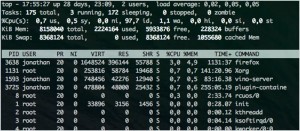
top
This is a small tool which is pre-installed in many unix systems. When you want an overview of all the processes or threads running in the system: top is a good tool. You can order these processes on different criteria and the default criteria is CPU.

2. htop
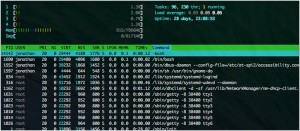
htop
Htop is essentially an enhanced version of top. It’s easier to sort by processes. It’s visually easier to understand and has built in commands for common things you would like to do. Plus it’s fully interactive.

3. atop

Atop monitors all processes much like top and htop, unlike top and htop however it has daily logging of the processes for long-term analysis. It also shows resource consumption by all processes. It will also highlight resources that have reached a critical load.

4. apachetop

Apachetop monitors the overall performance of your apache webserver. It’s largely based on mytop. It displays current number of reads, writes and the overall number of requests processed.

5. ftptop

ftptop gives you basic information of all the current ftp connections to your server such as the total amount of sessions, how many are uploading and downloading and who the client is.

Lire la suite…

Categories: Système Tags: ,

iptables recent module usage by example

21/06/2024 Categories: Réseau, Sécurité Tags: , , , , Comments off

https://www.dbsysnet.com/wp-content/uploads/2016/06/iptables.jpgiptables recent module usage by example

icmp check: 2 packets per 10 seconds – rcheck

iptables -F
iptables -A INPUT -p icmp --icmp-type echo-request -m recent --rcheck --seconds 10 --hitcount 2 --name ICMPCHECK -j DROP
iptables -A INPUT -p icmp --icmp-type echo-request -m recent --set --name ICMPCHECK -j ACCEPT

icmp check: 2 packets per 10 seconds – update

iptables -F
iptables -A INPUT -p icmp --icmp-type echo-request -m recent --update --seconds 10 --hitcount 2 --name ICMPCHECK -j DROP
iptables -A INPUT -p icmp --icmp-type echo-request -m recent --set --name ICMPCHECK -j ACCEPT

SSH brute-force prevention : 3 connections per 60 seconds

SSHPORT=22
iptables -F
iptables -A INPUT -p tcp --dport ${SSHPORT} -m state --state NEW -m recent --update --seconds 60 --hitcount 3 --name BRUTEFORCE -j DROP 
iptables -A INPUT -p tcp --dport ${SSHPORT} -m state --state NEW -m recent --set --name BRUTEFORCE -j ACCEPT

SSH brute-force prevention : 3 connections per 60 seconds – separate chain

SSHPORT=22
iptables -F
iptables -X
iptables -N BRUTECHECK
iptables -A INPUT -p tcp --dport ${SSHPORT} -m state --state NEW -j BRUTECHECK
iptables -A BRUTECHECK -m recent --update --seconds 60 --hitcount 3 --name BRUTEFORCE -j DROP
iptables -A BRUTECHECK -m recent --set --name BRUTEFORCE -j ACCEPT

SSH port knocking : tcp/1000 , tcp/2000

SSHPORT=22
N1=1000
N2=2000
iptables -F
iptables -X
iptables -N KNOCK1
iptables -N KNOCK2
iptables -N OK

iptables -A KNOCK1 -m recent --set --name SEENFIRST
iptables -A KNOCK1 -m recent --remove --name KNOCKED
iptables -A KNOCK1 -j DROP

iptables -A KNOCK2 -m recent --rcheck --name SEENFIRST --seconds 5 -j OK
iptables -A KNOCK2 -m recent --remove --name SEENFIRST
iptables -A KNOCK2 -j DROP

iptables -A OK -m recent --set --name KNOCKED
iptables -A OK -j DROP

iptables -A INPUT -p tcp --dport ${N1} -j KNOCK1
iptables -A INPUT -p tcp --dport ${N2} -j KNOCK2
iptables -A INPUT -p tcp --dport ${SSHPORT} -m state --state NEW -m recent --seconds 10 --rcheck --name KNOCKED -j ACCEPT
iptables -A INPUT -p tcp --dport ${SSHPORT} -m state --state NEW -j DROP

SSH port knocker script

#!/bin/bash
HOST="172.16.20.2"
SSHPORT=22
KNOCKS="1000 2000"

for PORT in $KNOCKS; do
  echo "Knock: $PORT"
  telnet $HOST $PORT &> /dev/null &
  P=$(echo $!)
  echo "PID: ${P}"
  sleep 1
  kill -KILL ${P}
done
ssh -p${SSHPORT} ${HOST}

Source: Pejman Moghadam

How to Install and Configure UFW – An Un-complicated FireWall in Debian/Ubuntu

21/06/2024 Categories: Réseau, Sécurité Tags: , , , , Comments off

ufw debian ubuntuSince computers are connected to each other, services are growing fast. Email, Social Media, Online Shop, Chat until Web Conferencing are services that used by user. But on the other side this connectivity just likes a double-side knife. It’s also possible to send bad messages to those computers like Virus, malware, trojan-apps are one of them.

Install UFW Firewall

The Internet, as the biggest computer network is not always fill with good people. In order to make sure our computers / servers are safe, we need to protect it.

One of the must have component on your computer / servers is Firewall. From Wikipedia, a definition is:

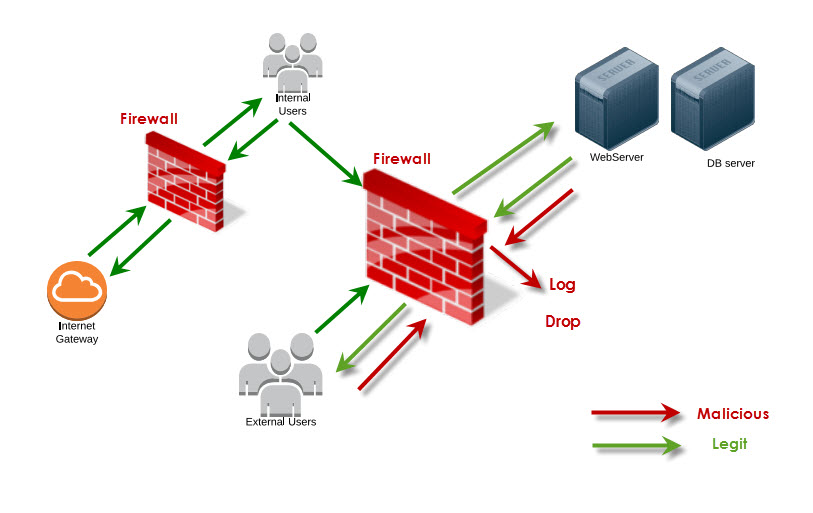
In computing, a firewall is a software or hardware-based network security system that controls the incoming and outgoing network traffic by analysing the data packets and determining whether they should be allowed through or not, based on applied rule set.

Iptables is one of the firewall that widely used by servers. It is a program used to manage incoming and outgoing traffic in the server based on a set of rules. Generally, only trusted connection is allowed to enter the server. But IPTables is running at console mode and it’s complicated. Those who’re familiar with iptables rules and commands, they can read the following article that describes how to use iptables firewall.

Installation of UFW Firewall in Debian/Ubuntu

To reduce the complexity of how-to setting IPTables, there is a lot of fronted. If you’re running Ubuntu Linux, you will find ufw as a default firewall tool. Lets start to explore about ufw firewall.

What is ufw

The ufw (Uncomplicated Firewall) is an frontend for most widely used iptables firewall and it is well comfortable for host-based firewalls. ufw gives a framework for managing netfilter, as well as provides a command-line interface for controlling the firewall. It provides user friendly and easy to use interface for Linux newbies who are not much familiar with firewall concepts.

While, on the other side same complicated commands helps administrators it set complicated rules using command line interface. The ufw is an upstream for other distributions such as Debian, Ubuntu and Linux Mint.

Basic Usage ufw

First, check if ufw is installed using following command.

$ sudo dpkg --get-selections | grep ufw
ufw 		install

If it’s not installed, you can install it using apt command as shown below.

$ sudo apt-get install ufw

Before you use, you should check whether ufw is running or not. Use the following command to check it.

$ sudo ufw status

If you found Status: inactive, it mean it’s not active or disable.

NEW! An indispensable ebook for every Linux administrator!

Enabling / Disabling ufw

To enable it, you just need to type the following command at the terminal.

$ sudo ufw enable

Firewall is active and enabled on system startup

To disable it, just type.

$ sudo ufw disable

List the current ufw rules

After the firewall is activated you can add your rules into it. If you want to see what are the default rules, you can type.

$ sudo ufw status verbose
Sample Output
Status: active
Logging: on (low)
Default: deny (incoming), allow (outgoing)
New profiles: skip
$

Lire la suite…

4 outils utiles pour rechercher et supprimer des fichiers en double sous Linux

20/06/2024 Categories: Système Tags: , , , Comments off

L’organisation de votre répertoire personnel ou même de votre système peut être particulièrement difficile si vous avez l’habitude de télécharger toutes sortes de choses sur Internet.

Souvent, vous constaterez que vous avez téléchargé le même mp3, pdf, epub (et toutes sortes d’autres extensions de fichiers) et que vous l’avez copié dans différents répertoires. Cela peut encombrer vos répertoires de toutes sortes de choses dupliquées inutiles.

Dans ce didacticiel, vous allez apprendre à rechercher et à supprimer des fichiers en double sous Linux à l’aide des outils de ligne de commande rdfind et fdupes, ainsi qu’à l’aide d’outils d’interface graphique appelés DupeGuru et FSlint.

Une note de prudence – faites toujours attention à ce que vous supprimez sur votre système car cela peut entraîner une perte de données indésirable. Si vous utilisez un nouvel outil, essayez-le d’abord dans un répertoire de test où la suppression de fichiers ne posera pas de problème.

Rdfind – Trouve les fichiers en double sous Linux

Rdfind provient de la recherche de données redondantes. C’est un outil gratuit utilisé pour trouver des fichiers en double dans ou dans plusieurs répertoires. Il utilise la somme de contrôle et trouve les doublons basés sur le fichier contient non seulement des noms. Lire la suite…

Categories: Système Tags: , , ,

Iptables Tutorial – Securing Ubuntu VPS with Linux Firewall

20/06/2024 Categories: Réseau, Sécurité Tags: , , Comments off

Are you looking for a complete iptables tutorial? Stay put. In this article, we will show you how to install and use iptables on the Ubuntu system. By learning about this Linux firewall tool, you can secure your Linux VPS using the command-line interface.

What is Iptables, and How Does It Work?

Simply put, iptables is a firewall program for Linux. It will monitor traffic from and to your server using tables. These tables contain sets of rules, called chains, that will filter incoming and outgoing data packets.

When a packet matches a rule, it is given a target, which can be another chain or one of these special values:

  • ACCEPT – will allow the packet to pass through.
  • DROP – will not let the packet pass through.
  • RETURN – stops the packet from traversing through a chain and tell it to go back to the previous chain.

In this iptables tutorial, we are going to work with one of the default tables, called filter. It consists of three chains:

  • INPUT –  controls incoming packets to the server.
  • FORWARD – filters incoming packets that will be forwarded somewhere else.
  • OUTPUT – filter packets that are going out from your server.

Before we begin this guide, make sure you have SSH root or sudo access to your machine that runs on Ubuntu 16.04 or up. You can establish the connection through PuTTY (Windows) or terminal shell (Linux, macOS). If you own Hostinger VPS, you can get the SSH login details on the Servers tab of hPanel.

iptables rules only apply to ipv4. If you want to set up a firewall for the ipv6 protocol, you will need to use ip6tables instead.

Lire la suite…

Categories: Réseau, Sécurité Tags: , ,